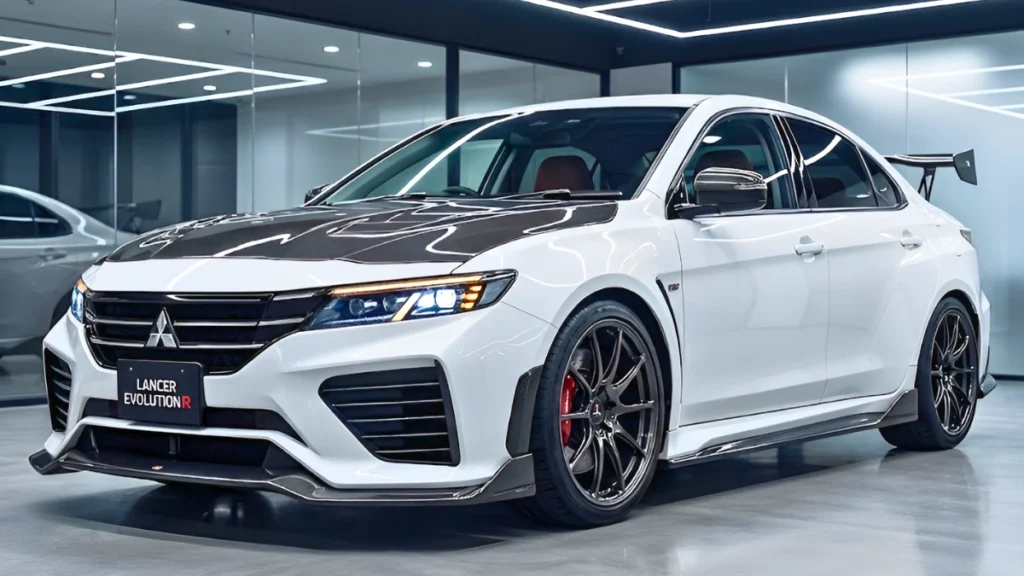
2026 Mitsubishi Lancer “Black Edition” Tour: The automotive world has been waiting for a shake-up, and the 2026 Mitsubishi Lancer “Black Edition” has arrived to shatter the silence. This vehicle does not ask for permission to enter the scene; it kicks the door down with an attitude that we haven’t seen since the golden era of street racing. Mitsubishi has clearly decided that subtlety is overrated. The Black Edition concept takes the beloved Lancer heritage and dips it in a vat of aggression, resulting in a sedan that looks like a stealth fighter jet for the road. From the asphalt-scraping aero kit to the deep void of its custom rims, this machine is a masterclass in visual intimidation. It represents a bold return to form, signaling that the days of boring commuter cars are officially numbered. Let’s take a comprehensive tour of the meanest, darkest, and most aggressive Lancer design ever conceived.
Midnight Paint Absorbs All Light
The first thing that strikes you about this vehicle is the paint job. It isn’t just black; it is a profound, light-absorbing obsidian that seems to delete the car from the background at night. Mitsubishi has utilized a special multi-coat application that blends a metallic flake with a high-gloss clear coat, giving the bodywork a liquid appearance under city streetlights. This finish highlights the sharp creases and muscular lines of the chassis without needing bright colors to shout for attention. The paint looks deep enough to drown in, creating a sinister profile that turns heads precisely because it tries so hard to remain undercover. It sets the tone for the entire “Black Edition” ethos, proving that the absence of color can be the boldest color choice of all.
Front Grille Screams Pure Aggression
Staring into the face of the 2026 Black Edition feels like locking eyes with a predator. The traditional chrome “Dynamic Shield” has been completely banished in favor of high-gloss piano black armor. The grille mesh is wider and sharper, featuring a honeycomb pattern that looks borrowed from high-performance supercars. This open design isn’t just for looks; it feeds massive amounts of air into the engine bay, hinting at the turbocharged powerhouse lurking behind it. The Mitsubishi emblem floats in the center, finished in a dark smoked chrome that is barely visible until the light hits it just right. This front fascia transforms the friendly face of a sedan into a road-eating monster that clears the fast lane instantly.
Razor Sharp Headlights Slice Darkness
Lighting plays a crucial role in the car’s mean personality. The designers have narrowed the headlight housings into lethal, squinting slits that wrap around the front fenders. Inside, tri-bar LED projectors glow with an icy white intensity, flanked by daytime running lights that act as angry eyebrows. When the car is unlocked, these lights perform a sequential dance, waking up the beast with a digital flourish. The blackout housing inside the headlight unit ensures that no stray reflections ruin the stealth vibe. At night, the beam pattern cuts through the darkness with laser-like precision, ensuring that the driver sees every apex and hazard long before they arrive.
Vented Hood Hints At Power
A flat hood would have been a wasted opportunity on a car this aggressive. Instead, the Black Edition features a heavily sculpted bonnet with functional heat extraction vents. These vents are positioned strategically to pull hot air out of the engine bay, keeping intake temperatures low for maximum performance. The raised power dome in the center suggests that the engine cover sits high, accommodating a large top-mount intercooler or elaborate piping. Visually, these lines draw the eye backward from the grille to the windshield, adding a sense of speed and forward motion even when the car is parked. It is a classic muscle car trope applied perfectly to a modern Japanese sport sedan.
Nineteen Inch Rims Define Stance
Shoes make the outfit, and the wheels on this Lancer are absolutely critical to its success. We are looking at a set of staggered 19-inch forged aluminum wheels finished in a flat satin black. The design is a complex web of thin spokes that extend all the way to the rim edge, making the wheels look even larger than they are. The satin finish contrasts beautifully with the gloss body paint, adding texture to the profile. These aren’t generic aftermarket alloys; they look bespoke, designed specifically to fill the wheel arches completely. The fitment is flush, pushing the wheels out to the corners of the car for a wide, stable footprint that looks ready for the track.
Neon Calipers Pop Behind Spokes
With so much darkness, the eyes need a focal point to anchor the visual experience. Peeking out from behind the dark spokes are massive monoblock brake calipers painted in a shocking neon acid green. This splash of color is the only brightness on the entire exterior, and it works incredibly well. It signals that this car possesses serious stopping power, likely from a high-performance partner like Brembo or Akebono. The contrast is jarring in the best way possible, adding a layer of tuner culture flair to the factory design. Large cross-drilled rotors sit behind the calipers, further emphasizing that this machine is built for hard driving and heat dissipation.
Side Skirts hug The Tarmac
Connecting the front and rear wheels are aggressive side skirts that sit dangerously close to the ground. These aerodynamic elements feature a winglet design near the rear wheel arch, which helps smooth out airflow along the side of the car. Finished in exposed carbon fiber, they add a raw, race-inspired texture to the lower body. The skirts visually lower the car’s center of gravity, making it look like it is magnetised to the road surface. Practically, they prevent air from rolling under the chassis, which creates high-speed stability. Aesthetically, they complete the “widebody” look, bridging the gap between the flared fenders and the road.
Swan Neck Wing Dominates Rear
You cannot have a “mean” Lancer without a massive wing, and the Black Edition delivers a skyscraper. This isn’t a simple decklid spoiler; it is a full GT-style wing mounted on swan-neck uprights. This mounting style attaches to the top of the wing blade rather than the bottom, leaving the underside smooth for cleaner airflow and more downforce. The wing itself is crafted from carbon fiber with aggressive end plates that feature the Mitsubishi logo in ghosted text. It dominates the rear profile, standing tall enough to be seen in the rearview mirror of anyone foolish enough to try and pass. It is a functional statement piece that screams motorsport heritage.
Rear Diffuser Channels Turbulent Air
Below the bumper, the rear end business is handled by a complex diffuser setup. Massive vertical fins slice through the air, channeling the turbulent wake out from under the car to reduce drag. The diffuser is molded from dark composite materials that look durable and race-ready. Nestled within this structure is an F1-style rain light in the center, a nod to top-tier racing machines. This lower section gives the rear of the car a blocky, planted look, making the vehicle appear much wider than a standard sedan. It finishes off the ground effects package, ensuring the aero tour is complete from front to back.
Titanium Exhaust Tips Spit Fire
Flanking the diffuser are two oversized exhaust outlets that mean serious business. Unlike the fake plastic tips seen on many modern cars, these appear to be genuine burnt titanium. The blue and purple heat gradation on the metal tips adds a touch of exotic flair to the dark rear end. We can assume the sound emanating from these pipes is a deep, guttural growl that snaps and pops on downshifts. The diameter of the pipes suggests a free-flowing exhaust system designed to let the turbo engine breathe freely. Visually, they act as the cannons of the vehicle, warning followers that this Lancer has the firepower to back up its looks.
Shadowed Badging Keeps Secrets
In keeping with the stealth theme, all exterior badging has been treated to a “blackout” process. The Lancer script on the trunk lid is matte black, making it almost invisible against the gloss paint. The “Evolution” or “Black Edition” badges are rendered in a dark grey gunmetal, requiring a close look to decipher. This lack of chrome creates a cleaner, more cohesive design language. It creates an air of mystery, as onlookers might not immediately know what specific model just blew past them. It is a confident design choice, relying on the car’s silhouette to do the talking rather than flashy nameplates.
Alcantara Cockpit Grip Is Real
Opening the door reveals an interior that matches the exterior’s intensity. The cabin is swathed in high-grade black Alcantara, a suede-like material known for its grip. It covers the steering wheel, the dashboard, and the door inserts, eliminating glare and preventing the driver’s hands from slipping during spirited maneuvers. The texture absorbs sound and light, creating a focused, cocoon-like atmosphere. Touching the surfaces feels premium and purposeful, far removed from the hard plastics of economy cars. The scent of fresh leather and synthetic suede fills the air, creating a sensory experience that screams “driver’s car” before you even push the start button.
Bucket Seats Lock You In
The throne for the driver is a deeply bolstered Recaro racing bucket seat. These aren’t just for show; the aggressive side bolsters are designed to clamp your torso in place during high-G cornering. Upholstered in black leather with diamond-stitched centers, they offer a mix of luxury and utility. The stitching is done in a dark grey thread to maintain the monochrome theme, though a “Black Edition” logo is embroidered on the headrest in that same neon green seen on the brake calipers. These seats promise that no matter how hard you throw the car into a turn, you will remain perfectly centered behind the wheel.
Digital Dash Shows Vital Stats
The technology inside has taken a massive leap forward. The traditional analog gauges are replaced by a razor-sharp digital instrument cluster. In “Track Mode,” the display turns red and focuses solely on the tachometer, gear selection, and speed. Secondary menus allow the driver to monitor boost pressure, oil temperature, and tire G-forces in real-time. The graphics are futuristic and crisp, with zero lag. This screen acts as the nerve center of the car, communicating the machine’s health and performance status directly to the pilot. It brings the Lancer firmly into the modern digital age without losing the raw data that enthusiasts crave.
Final Word: 2026 Mitsubishi Lancer “Black Edition” Tour
The 2026 Mitsubishi Lancer “Black Edition” concept is more than just a car; it is a manifesto. It proves that the sedans can still be exciting, dangerous, and incredibly desirable. The combination of the murdered-out aesthetic, the functional aerodynamics, and the aggressive stance creates a vehicle that feels alive. It taps into a deep nostalgia while offering a futuristic vision of what performance looks like. If Mitsubishi brings this level of heat to the production line, they won’t just sell cars; they will reignite a culture. This is, without a doubt, the meanest look we have ever seen, and the streets are ready for it.